

Tree Lobster | Meet The Endangered

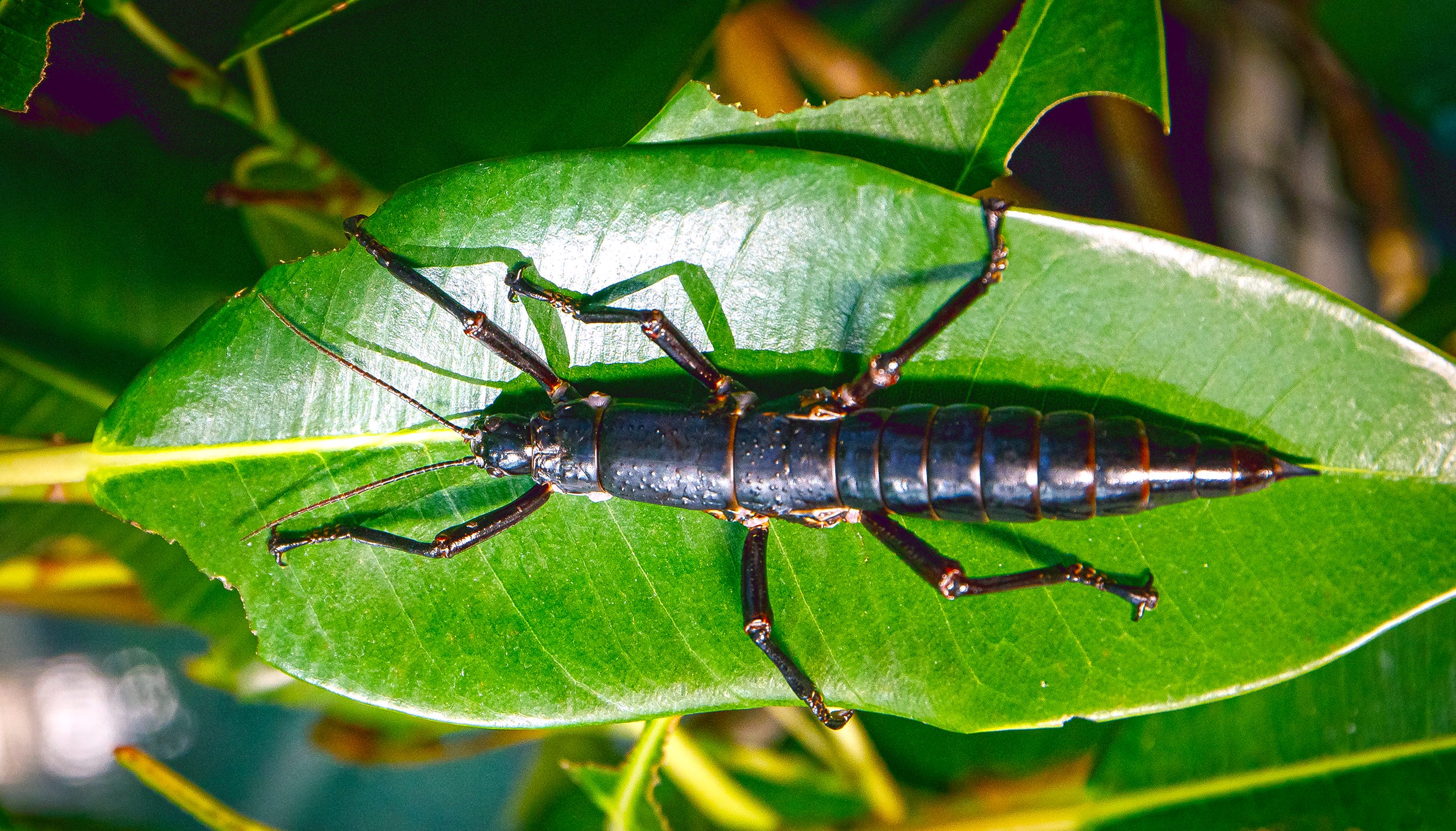
Tree Lobster (Dryococelus australis)
In the Tasman Sea between Australia and New Zealand lies a speck of land a quarter the size of Manhattan called Lord Howe Island. Isolated from humanity until 1788, when it was first discovered by British explorers, 70% of the island remains untouched, virgin forest.
These forests once housed one of the world’s rarest insects. Officially it goes by the extravagantly bland moniker of ‘Lord Howe Island Stick Insect’. But locals know it by the far more evocative nickname ‘Tree Lobster’, after its large size and heavily armoured exoskeleton.
The Tree Lobster was once so common it was used as bait by fishermen. But the accidental introduction of black rats to the island in 1918 decimated the population, and it was declared officially extinct in 1920. In 2001 scientists hypothesized that it could have clung on atop the island’s surrounding rocklets, and indeed found a population of 24 living insects on Ball’s Pyramid, an islet 20 km (12 mi) offshore.
Since then efforts have been made to breed the insects in captivity. But far more importantly, Lord Howe Island launched a rat eradication program in 2019 and was declared rat-free in 2023. After a century’s absence, thousands of captive Tree Lobsters await a triumphant return to their edenic homeland.
IUCN: Critically Endangered (CR)